Short Days, Small Skeins: Seven Makes for a Single Winter Evening
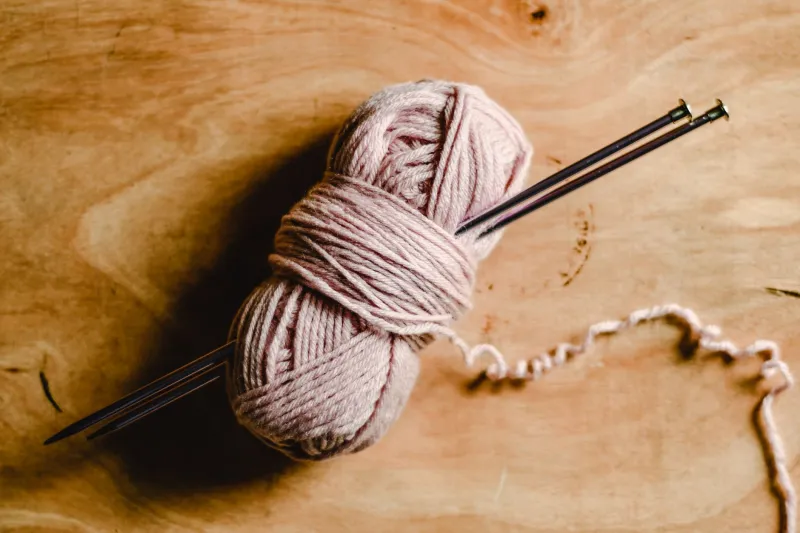
There is a particular kind of tiredness that arrives in late November. The heating clicks on, the light drains out of the afternoon by four, and suddenly the jumper you were so excited about in September has become a pile of homework in a project bag. You still want to make something. You just don’t want to make something enormous.
This is where the one-ball project earns its place. Not as a lesser make, not as a pause before the real knitting begins, but as a proper piece of making with a beginning, a middle and an end you can actually see. A single skein has edges. That is its quiet genius.
The case for a smaller cast-on
A small project is not a confession that your concentration has gone. It is a sensible response to the season. When the days are short, the urge to finish something can be stronger than the urge to start something grand. Fingerless mitts, a mug cosy, a charity square: these are not filler. They are the things that keep your hands moving and your confidence ticking over until the light comes back.
The other advantage is that small projects let you use the yarn you already own. Most of us have odd balls, half balls and optimistic single skeins bought at a wool show because the colour was too good to leave behind. A one-evening make turns those into something useful rather than another item on the stash inventory.
Before you pick a pattern: three honest checks
First, check the yardage, not just the weight. A 50g ball of DK usually gives you somewhere around 100–120 metres, but it varies. A 50g ball of 4ply can be closer to 200 metres. If a pattern asks for 120 metres and your ball has 95, you need a plan: contrast cuffs, a shorter cuff, or a different pattern.
Second, remember that small does not mean gauge-free. For mitts and ear warmers, tension still matters. A loose knitter can turn a cosy mitt into a draughty flipper. Knit a small swatch if the pattern asks for one, or at least measure the first few centimetres before you commit.
Third, match the yarn to the job. Acrylic DK is brilliant for charity squares and ornaments that need to be washable. Cotton is lovely for coasters and mug rugs. Wool is warm and forgiving for mitts. If you are using oddments, choose projects where a slight difference in fibre will not ruin the finished thing.
A kitchen scale is genuinely useful here. Weigh the ball before you start and after you finish. It takes the guesswork out of those nervy final rows.
Seven makes that fit an evening (or two)
1. Fingerless mitts
A pair of simple fingerless mitts in DK usually takes around 80–110 metres, so one 50g ball is often enough. Use 4mm needles, work a ribbed cuff and a thumb opening, and keep the fit close but not tight. In 4ply, a 50g ball will comfortably do a pair with yarn to spare. If you are short, work the cuffs in a contrast colour and pretend it was always the plan.
2. A mug cosy
This is the project for the evening when you want to finish something before the tea goes cold. You need roughly 15–25g of DK, a 3.75mm or 4mm needle and a button. Measure the circumference of your favourite mug first; a cosy that is too snug is just a sleeve with ambitions. It is also a good use for a single lovely button from the tin.
3. Mini stockings and baubles
Tiny knitted ornaments use 10–20g of DK and a 3mm needle. They are ideal for scraps and for practising short rows, simple colourwork or a neat little heel. A miniature stocking can be hung on the tree, tied to a gift or filled with a chocolate. They are also forgiving: no one inspects the inside of a bauble.
4. Charity squares
A 15cm DK square takes roughly 20–30g of yarn on 4mm needles. Many hospital, care-home and refugee-support projects ask for specific sizes, so check the receiving group’s requirements before you cast on. A stack of squares is a satisfying thing to build through December, and it turns oddments into something that will be genuinely useful.
5. An ear warmer or headband
A simple twisted or buttoned headband uses around 30–40g of DK. It is quick, warm and much less intimidating than a hat if you are not in the mood for decreases. Work it flat and seam it, or join in the round if you prefer. A slightly wider band is kinder over the ears on a frosty morning.
6. Pocket hugs and tiny hearts
These use 5–10g of DK and a 3mm needle. They are small enough to make from the last scraps of a favourite jumper and cheerful enough to leave in a coat pocket, a handbag or a parcel for someone who needs a bit of quiet encouragement. They are also a good way to use up tiny lengths that are too short for anything else.
7. Mug rugs and coasters
A pair of cotton coasters takes about 20g of DK cotton on 3.5mm needles. Work them double thickness or add a fabric backing if you want extra protection. They are useful, washable and quick enough to make a last-minute gift without the panic of a full-size project.
Matching a pattern to the ball you already have
The easiest method is to search by yarn weight and yardage rather than by project name. If you have 95 metres of DK, look for patterns that ask for 80–90 metres. If you have 35g left of a 50g ball, choose a smaller size or a design with contrast elements. Do not assume that a pattern labelled ‘one skein’ will fit your skein; check the metres.
If you are substituting yarn, stay close to the suggested weight. Holding two strands of 4ply together can approximate DK, but it changes the fabric and the yardage. It can work beautifully for a cosy, but it is not a direct swap. For small projects, the safest match is the boring one: same weight, similar fibre, enough metres.
An evening is a generous label
For an experienced knitter, a mug cosy really can be an evening. For a newer knitter, it might be two evenings and a bit of lunchtime. That is fine. The point is not to turn small projects into another deadline. The point is to have a finish line you can see without a spreadsheet.
So if the big jumper is sitting there like a rainy Sunday, leave it. Pick out one ball, check the yardage, and cast on something small enough to finish before the Christmas decorations go up. The dark weeks are much friendlier with a little stack of finished things on the table.