Same Stitch, Different Words: Decoding Knitting Patterns From Across the Pond
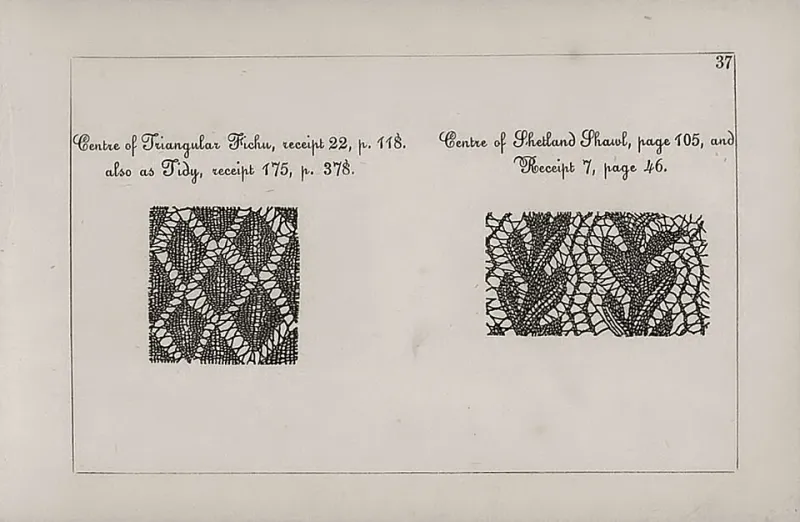
Photo: Possibly by Jane Gaugain, Public domain, via Wikimedia Commons
There's a particular kind of email that lands in our inbox every autumn, and it usually goes something like this: "I've printed off a lovely pattern from a US site, cast on 96 stitches, and now I'm staring at 'yo, k3, yrn' and I'm convinced the designer has made it up as they went along." They haven't, of course. They're simply writing in the other dialect.
Knitting English splits neatly down the middle. On this side of the Atlantic we say yarn forward, cast off and stocking stitch; on the other side they say yarn over, bind off and stockinette. The actual loop of wool travelling around the needle is identical. Only the words differ. And once you've spotted the pattern behind the pattern, that moment of panic turns into something much more enjoyable — a small act of translation, like reading a menu in French and realising it's just chicken.
It all starts with a yarn over
The yarn over is the classic flashpoint. In US patterns, "yo" simply means: take the yarn over the needle and carry on, making a little eyelet in the fabric. Most modern UK patterns now write "yarn over (yo)" too, or use "yfwd" (yarn forward) for the same thing.
The wrinkle is that older British patterns also use "yrn" — yarn round needle — which throws the wool the whole way around the tip rather than just forward. In practice both create an increase with a hole, but the loop sits slightly differently and the stitch count on the following row will tell you what the designer intended. If your numbers don't add up, you haven't lost your mind; you've just met a vintage convention that predates most of the patterns in your nan's wardrobe.
A short translation table for the project bag
| UK term | US term | What it actually means |
|---|---|---|
| Tension | Gauge | Stitches and rows per 10cm / 4in |
| Cast off | Bind off | Finishing the edge |
| Stocking stitch (st st) | Stockinette (st st) | Knit one row, purl one row |
| Reverse stocking stitch | Reverse stockinette | The bumpy side as the right side |
| Moss stitch | Seed stitch | Alternating knits and purls, offset each row |
| Yarn forward / yarn over | Yarn over | An eyelet increase |
| Slip one, knit one, pass slipped stitch over (skpo) | Slip, slip, knit (ssk) | A left-leaning decrease |
| Wool round needle (yrn) | Yarn over | As above, older UK wording |
| Pick up and knit | Pick up and knit | Identical — some things are universal |
One word of warning on moss stitch: the American "moss stitch" is a different beast entirely — closer to what we'd call double moss or Irish moss. If a US pattern calls for moss stitch and the photo looks denser than you expected, that's why.
Needles, millimetres and the ghost of old numbering
Needle sizing is where British knitters of a certain vintage get quietly nostalgic. Before metrication, UK needles were numbered in reverse — the higher the number, the finer the needle — and a size 10 was a slim little 3.25mm. American patterns still use their own numbers, which don't match the old UK ones. A US 6 is a 4mm; a US 3 is 3.25mm. If a pattern lists only a number and no millimetres, a quick conversion chart will save you an evening of doubt.
Happily, most 2026 pattern PDFs worth their salt list metric first and everything else in brackets. If yours doesn't, convert before you cast on rather than three rows into a sleeve.
Calling the yarn by a different name
Yarn weights are another gentle trap. Our 4-ply is their fingering or sock weight. Our DK sits somewhere around their light worsted, which is why an American DK pattern can come out slightly larger than you'd expect. Our aran is roughly their worsted, and our chunky is their bulky.
This matters less than the internet would have you believe, because tension is the great leveller. If your swatch matches the pattern's numbers, the name on the ball band is just a label. If it doesn't, the label won't rescue you.
Reading a strange pattern without losing your nerve
A few habits make transatlantic patterns much less intimidating:
- Read the abbreviations list before you read the instructions. Every publisher has quirks, and most PDFs hide a glossary on the last page.
- Trust the stitch counts more than the words. They're the arithmetic that keeps the whole thing honest.
- Swatch in the round if the pattern is in the round. Flat tension lies to you about stocking stitch.
- Pencil in your own translation above the line. A pattern covered in biro is a pattern somebody actually used.
- If a term is genuinely obscure, Ravelry's pattern notes and the designer's own errata are usually kinder than guesswork.
Why the muddle is worth keeping
It would be easy to wish for one international standard, and to be fair, the industry has quietly drifted that way — most new British publications happily write "yarn over" and mean it. But there's something rather lovely about a craft that carries its own regional vocabulary. Gansey patterns from the Yorkshire coast, haps from Shetland, wristers, fair isle, the whole dialect of wool that has travelled with the people who knitted it.
Pattern dialects aren't a barrier to the craft. They're part of the texture of it — a reminder that a stitch made in a front room in Leeds and a stitch made in a front room in Ohio are the same stitch, described by two people who never met. Learn the handful of differences, keep the table in your bag, and the whole English-speaking knitting world opens up. Then get the kettle on and cast on.