The Ball Band Retires: Replacing a Discontinued Yarn Without Losing Your Nerve
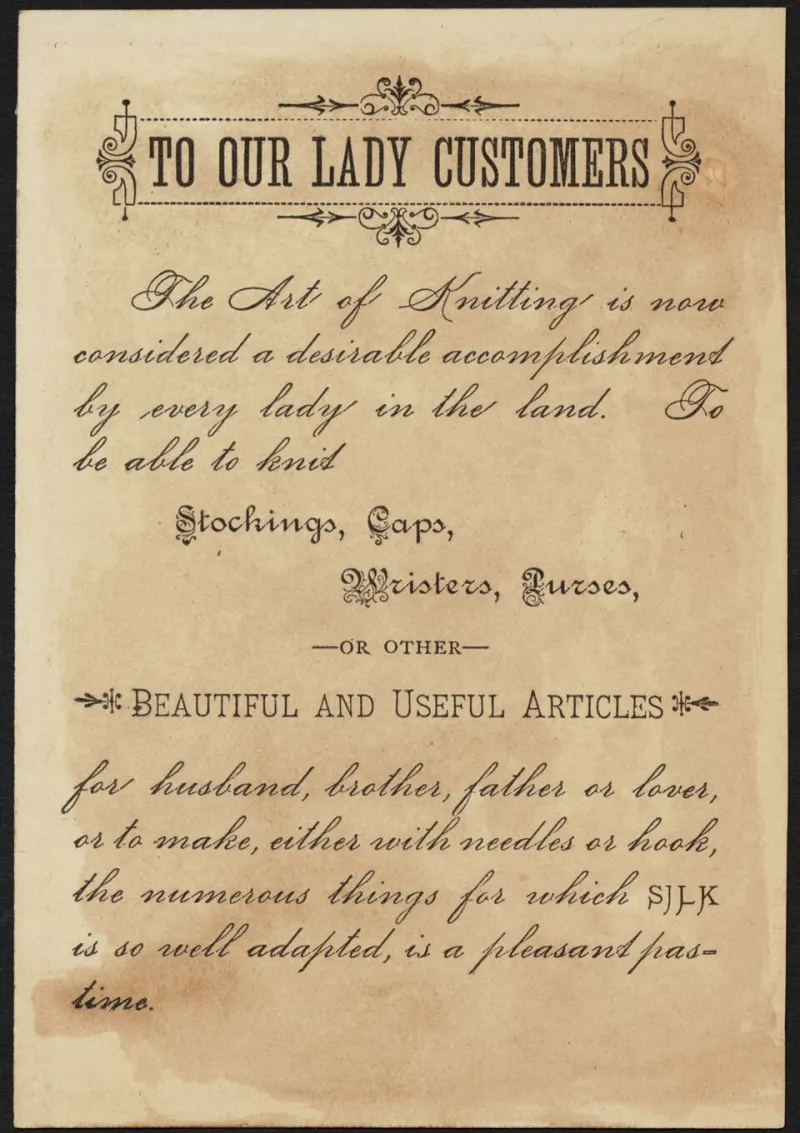
Photo: Boston Public Library, CC BY 2.0, via Wikimedia Commons
There is a particular kind of quiet panic that arrives when you open a favourite pattern page and see the word discontinued next to the yarn you have used for years. Maybe you have three balls left in the stash. Maybe you have none. Either way, the project you had planned suddenly feels like it is standing on a trapdoor.
Here at Knitters & Stitchers, we are not going to pretend that every substitution is a simple swap. It is not. A yarn is more than a colour and a fibre percentage; it is the way it twists, the way it falls, the way it behaves after a wash. But a discontinued yarn is not a craft emergency. It is a research project with a cup of tea attached.
Start with the ball band, not the colour
The first instinct is often to find something that looks similar on the shelf. Resist that for five minutes. The ball band is the most honest document you have, and it will tell you what you are actually trying to replace.
Look at fibre content first. A 100% wool is not the same as a wool-acrylic blend, even if the finished fabric looks similar in the shop. Wool brings bounce, warmth and a certain forgiving nature when blocking. Acrylic can be robust and easy to wash, but it may not hold a crisp cable or open up in the same way. Cotton has weight and drape; alpaca has halo and a tendency to grow. None of these are better or worse, but they are not interchangeable without thought.
Then look at metreage, not just grams. A 50g ball of one yarn can hold wildly different lengths from another. If your pattern calls for 1,200 metres and your substitute has 90 metres per ball rather than 110, you will need more balls than the pattern suggests. This is the boring arithmetic that saves you from a second-order panic halfway up the second sleeve.
The numbers that matter most
Gauge is the headline figure, but it is not the whole story. The pattern will usually give a gauge over 10cm in stocking stitch. That is your starting point, not your finish line. Row gauge matters too, especially for raglans, yokes and anything with a carefully planned armhole. A substitute that matches stitch gauge but runs long in the row can quietly add length where you did not want it.
Ply and construction are worth noticing as well. A woollen-spun 4-ply and a worsted-spun 4-ply can knit to the same tension and still feel completely different. One is airy and soft; the other is smoother and more defined. If the pattern relies on crisp stitch definition, a fuzzy substitute may blur the very thing you loved about it.
Finally, check the recommended washing instructions. This is the part many of us skim. If the original was hand wash only and the substitute is machine washable, that is a lovely upgrade. If it is the other way round, be honest about whether you will actually hand wash the finished item. A beautiful jumper that you are afraid to wear is not a successful substitution.
Swatch like you mean it
A swatch for a substitution is not the same as a quick tension square before you cast on. It is a test drive. Cast on enough stitches to measure comfortably, work the stitch pattern if there is one, and then treat the swatch the way you will treat the finished piece.
Wash it. Dry it flat or hang it, depending on what the ball band says. Let it rest. Then measure again. Some yarns bloom after washing and fill out; others relax and drape. Some grow alarmingly in water. A swatch that has not been washed is only half a swatch, and the second half is often where the surprises live.
While you are there, pay attention to how the fabric feels. Does it have the drape the pattern needs? A scarf wants softness and flow; a structured cardigan wants a bit more body. Does the colour pool or stripe in a way you like? Does the texture overpower a lace pattern? These are not failures. They are information.
When close enough is genuinely enough
Not every project needs a forensic match. For a simple hat, a pair of mittens or a cosy blanket, a near-match in gauge and fibre family is often perfectly fine. Colourwork can be forgiving too, provided the substitute is roughly the same thickness and does not fight the pattern.
If you are knitting for a baby or a busy household, a slightly different yarn that is easier to wash may be a better choice than an exact match that needs special care. Practicality is not a compromise; it is part of the design brief.
When to change the plan
There are times when the sensible answer is not a substitute at all. If the pattern depends on a specific drape, a very particular halo or a fibre that blocks into shape, a near-match can disappoint. A flowing linen top knitted in a springy wool will not behave like the original. A fitted garment with carefully calculated waist shaping is less forgiving than a loose shawl.
In those cases, you have two good options. You can choose a completely different yarn and accept that the finished object will be its own thing, or you can choose a different pattern that suits the yarn you can actually buy. Neither is a defeat. The point is to make the choice deliberately rather than hoping the needles will sort it out.
A short checklist before you buy
- Compare fibre content, not just the name on the label.
- Check metreage per ball and work out how many balls you really need.
- Match stitch gauge first, then look at row gauge.
- Notice ply, spin and texture, especially for cables and lace.
- Read the washing instructions and decide if you will follow them.
- Swatch, wash, dry and measure before casting on the real thing.
- Buy from a UK shop that allows a sensible return on unused balls, if you can.
The stash is not a museum, and neither is your pattern library. Yarns come and go, but the pleasure of making something that fits and feels right does not have to disappear with a ball band. Take your time, make a swatch, and let the substitute earn its place.