Every Patch Tells a Story: Why We've Fallen for Visible Mending
There is a jumper in my cupboard with a patch on the left elbow in a mustard yellow that doesn't match anything else I own. It is, objectively, the worst piece of sewing in the house. It is also the thing I get asked about most, usually by strangers, usually in the queue for a coffee. Somewhere between the hole appearing and the patch going on, the jumper stopped being a garment with a fault and became a garment with a history.
That shift is happening all over the country. Mending has come out of the sewing box and onto the table in the middle of the room.
From something you hid to something you show
Darning was once unremarkable — a sock with a woven heel was simply a sock that had been looked after. The wartime Make Do and Mend pamphlets turned it into a duty, and by the time cheap clothing arrived, mending had become a small embarrassment, something done by people who couldn't afford to replace things.
What's changed is the framing. The visible mending habit that has spread through repair cafés, library craft clubs and the corner of the internet devoted to sashiko-inspired stitching treats the repair as part of the design. A patch in a contrasting colour, a row of tidy running stitches across a jeans knee, a darned heel in a completely different sock yarn — these aren't apologies. They're decisions.
Why mending suits us so well
Britain has quietly built one of the best infrastructures in the world for this sort of thing. Repair cafés run out of church halls and community centres, mending tables at library craft sessions, textile groups attached to knitting circles, volunteer fixers who will look at your toaster and your torn coat with equal patience. The whole culture is built on a simple idea: bring the broken thing, sit down, and somebody will show you how.
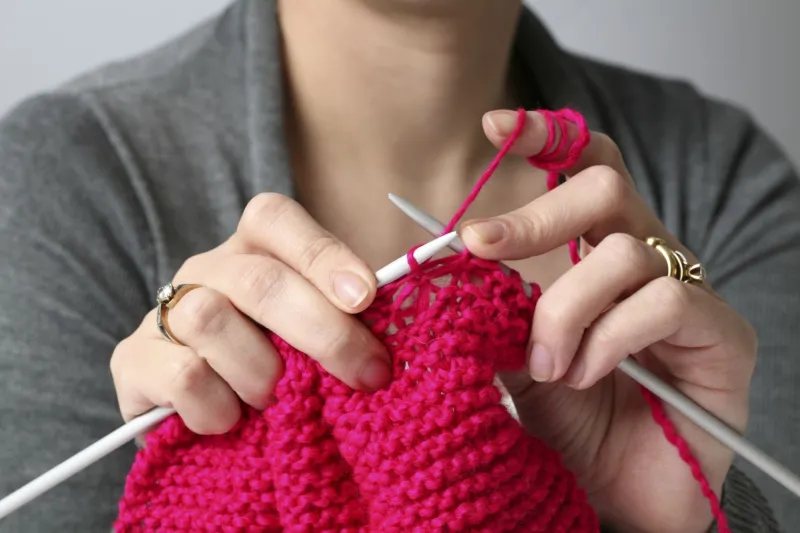
What makes mending particularly sociable is that it's slow in a very companionable way. Knitting groups have known this for years — the craft gives your hands something to do so the conversation can wander. Mending is the same but with lower stakes. Nobody is counting rows. Nobody is going to notice if you unpick and start again. You can sit with a mushroom and a needle and a cup of tea and be genuinely useful while having a perfectly good natter.
It's also cheap to start, which matters when so many hobbies have a £200 entry fee. A darning needle, a mushroom or a smooth egg-shaped object, a ball of leftover sock yarn and something holey — that's the whole kit.
What you actually need
- A darning mushroom, or a small smooth object to stretch the fabric over
- A blunt tapestry needle with a decent-sized eye
- Leftover sock yarn, embroidery floss, or a spool of sashiko thread
- A scrap of fabric for patching, ideally something with a bit of give
- Small sharp scissors and a few pins
If you're patching jeans, a patch of similar weight denim or cotton twill works better than anything too flimsy. If you're darning wool, use wool. Matching the fibre matters more than matching the colour — a cotton darn in a woollen sock will pull and pucker the first time you wear it.
Your first hole, step by step
Start with a jumper, because the stakes are low and the fabric is forgiving.
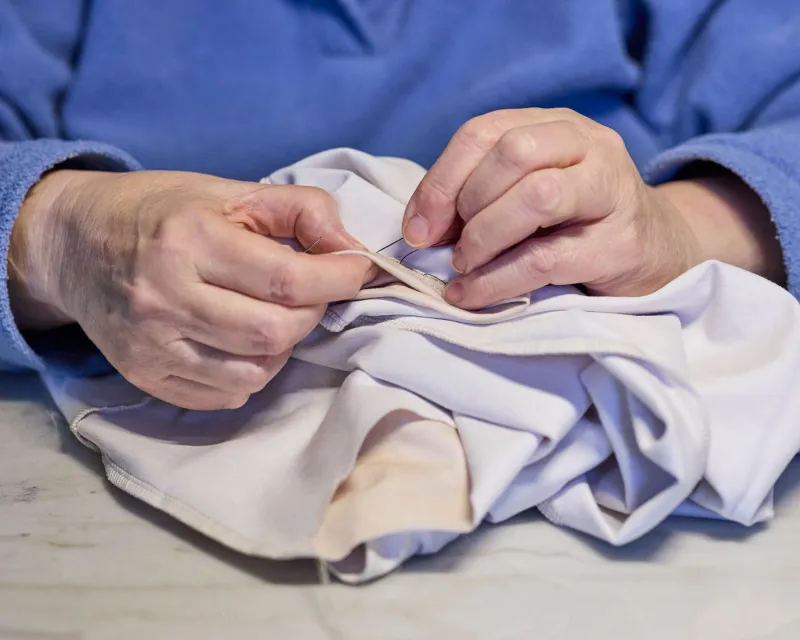
Turn the garment inside out and stretch the hole gently over your mushroom so the edges sit flat. Thread your needle and, working from the inside, anchor the thread with a couple of small stitches rather than a knot — knots work loose and feel lumpy against the skin.
Work a series of small running stitches across the hole from one side to the other, then come back the other way, weaving over and under the first set. Keep the tension light. If you pull hard, the darn will pucker the whole elbow and you'll be able to feel it every time you bend your arm. Finish by working the thread into the solid fabric on the inside.
The first one will look rumpled. Wear it anyway. The second will be better.
Patching denim without turning it into armour
For a worn knee or a frayed thigh, cut a patch at least a centimetre larger than the damaged area on every side. Turn the jeans inside out and pin the patch behind the hole. Then, working from the right side, stitch around the edge of the hole in a close running stitch — or machine it if you've got one and the fabric will take it. A grid of sashiko-style stitches across the patch is traditional, satisfying, and hides a multitude of wobbles.
Wash the finished thing inside out on a cool cycle. Give the patch a good press with the iron and it will settle into the garment within a week or two.
A few gentle rules worth bending
Don't pull tight. Don't use knots where you can weave the ends in instead. Keep the patch bigger than the hole, always. Match the stretch of the repair to the stretch of the garment, or the mend will fail before the fabric does. And if a repair looks wonky in the making, give it a wash and a wear before you unpick it — most mends look wrong on the mushroom and perfectly fine on a body.
The bit that isn't really about money
The financial argument for mending is obvious enough, and in a year when everyone is watching the heating bill, it's not nothing. But the reason people stay at the table long after their hole is fixed is something else. There's a particular satisfaction in taking a thing that was nearly finished and giving it another few winters. It's the opposite of the constant churn of buying and binning. It slows you down, it teaches your hands something, and it makes a jumper worth talking about.
So bring the holey thing to the next mending table you pass. Sit down. Thread a needle. The patch you make is a story, and the conversation is half the point.