Cast On Together, Finish Together: A Kinder Stitch-Along Plan
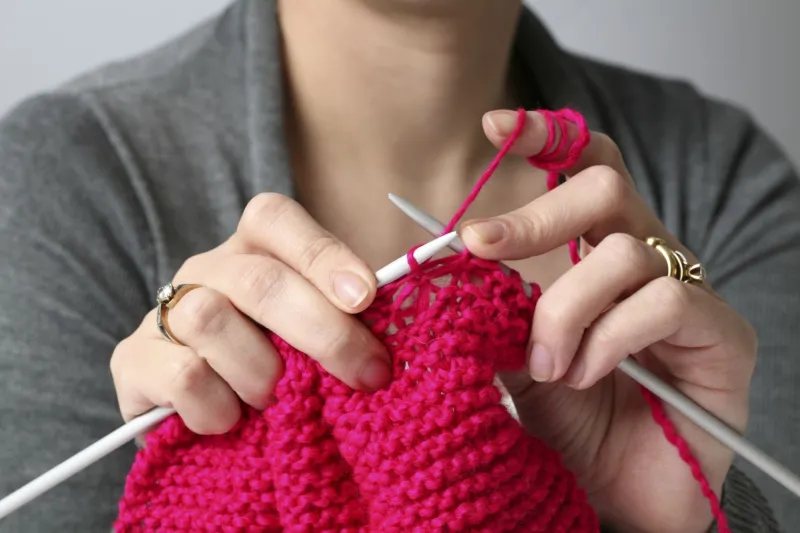
Photo: knitting group around table tea cups yarn hands UK community, via i.pinimg.com
With November darkening the windows and the clocks already changed, craft groups across the country are doing what they do best: deciding what to make next. A stitch-along sounds like the obvious answer. Everyone chooses a pattern, starts together, posts photos, finishes together. Lovely. Except we have all seen the other version — the one that begins with a flurry of cast-ons and ends with a silent group chat, three guilt-ridden WIPs and nobody quite sure when it officially stopped.
A good stitch-along is not a race and it is not a school. It is a shared excuse to make something with good company. If your group is planning a winter project, here is a kinder way to set it up.
Choose a Pattern That Wants to Be Finished
Start with the finish line in mind. The best stitch-along patterns are clear, forgiving and small enough to survive real life. A cowl, a simple hat, a blanket square, a pair of house socks or a shawl in a straightforward shape will do more for group morale than a fitted garment with five sizes and a mystery construction.
One new technique is plenty. Two is adventurous. Five is a group project in the sense that everyone will need a group to complain to. Offer a couple of options — maybe a plain version and a textured version — so people can choose the level of challenge they actually want in a dark January.
Put Slack in the Schedule
A six-week knit should get an eight-week plan. Build in a catch-up week, and resist the urge to fill every day with a target. Weekly goals are friendlier than daily quotas: one section, one colour repeat, one cuff. If someone falls behind, the schedule should have room for them to return without feeling like they have failed a test.
It also helps to name the finish date early and make it realistic. If the project is for a specific event, work backwards and then add a buffer. If it is not for an event, even better — choose a finishing celebration and let that be the deadline.
Check In Gently, Not Loudly
Weekly check-ins work best when they are low-pressure. Try a simple prompt: one photo, one question or one row of progress. No leaderboards. No comments about who is fastest. No ‘should be finished by now’ energy.
Buddy pairs can help people who feel shy about posting in a big group. A quiet thread for questions is useful too, especially for first-timers. And if the group meets in person, make sure the online side is not an afterthought — a short weekly recap means people who cannot attend still feel included.
Make Room for Every Pace
A stitch-along is a community project, not a performance. That means budget yarn options, accessible patterns, large-print copies if needed, and no assumption that everyone can knit for hours at a time. Some people will make ten-minute progress in the school car park. Some will finish in a fortnight. Some will crochet instead, or make a smaller version, or use the pattern as a starting point. All of that is good company.
Be clear about advice, too. Ask before offering corrections. Keep spoilery pattern details behind a warning. A few simple ground rules — be kind, be patient, no gatekeeping — will carry a group further than a long list of regulations.
Plan the Finish Properly
Finishing is a skill and a feeling. Give it some ceremony. A show-and-tell evening, a blocking afternoon, a group photo, a badge or a shared table of tea and cake all make the end visible. If the group wants a charitable angle, choose it early and keep it optional.
The point is not to create another unfinished object with a group name attached. It is to give people a reason to keep going, a place to ask for help and a moment to say: I made this, and I made it with other people.
Good Company, Not a Deadline
A stitch-along works when the pattern is the campfire, not the obstacle course. Keep it small, keep it flexible and keep the welcome warm. The finished objects are lovely, but the real result is a group that trusts each other enough to cast on again next time.