Your WIP Pile Isn't a Confession — It's a Map of Your Curiosity
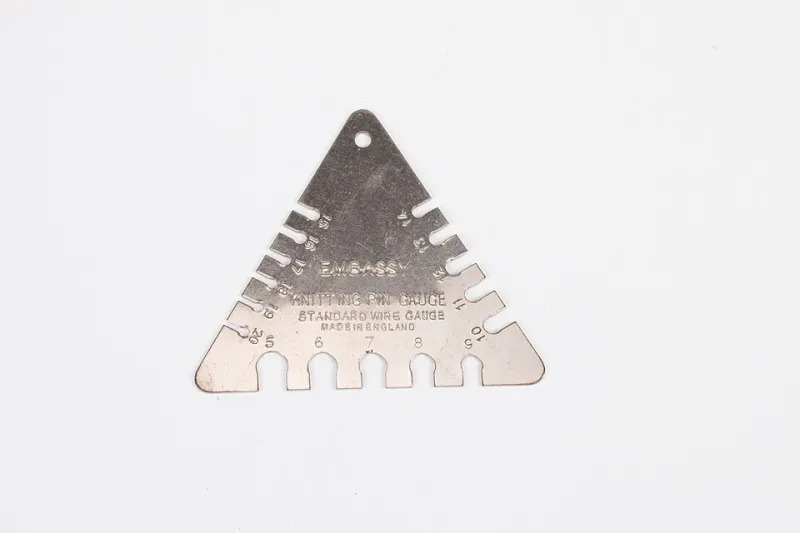
Photo: not researched, CC BY 4.0, via Wikimedia Commons
There is a bag in my spare room with a sleeve in it. Just the one sleeve. The body of the jumper is finished, the second sleeve has never existed, and the whole thing has been sitting there since, I think, 2023.
For a long time I treated that bag as evidence. Proof that I start things and do not finish them, that my taste outruns my patience, that I am the sort of person who buys yarn faster than she knits it. Then, somewhere around the third January of feeling guilty about it, I actually opened the bag and looked.
The yarn was lovely. The tension was fine. And I remembered, with a jolt, exactly why I had stopped: I had reached the point where the project became repetitive, and a new pattern had arrived that I wanted to learn from. That was all. Not a character flaw. A decision.
The guilt was never really yours
We are sold the idea of the finished object. Social media rewards the blocking photo, the modelled shot, the neat caption with the pattern link. Shops sell kits, magazines sell seasons, and everything points at the end. It is a lovely story, but it is a shop window, not a life.
The truth is that knitting and stitching are slow, and curiosity is fast. New stitches, new colours, new techniques — of course they pull at you. Cast-on-itis is not a disease, it is an appetite. Second sock syndrome is not laziness, it is a brain that has already learned what a sock is and is ready for something else.
If you have a pile of unfinished projects, it means you have tried more things than the person with one tidy finished jumper. That is not a moral failing. It is a syllabus.
Every WIP is a record of a moment
Look properly at your pile and see what it says about the last few years.
There is probably a project from a hard winter, when you needed the repetitive comfort of stocking stitch. There is probably one from a period of optimism, when you cast on a lace shawl in January and by March the light had changed. There is likely a baby garment for a baby who is now at school.
None of those are failures. They are artefacts of your actual life. The project you abandoned in a heatwave is not a lesser object than the one you finished, it is just a different page of the same diary.
Rotate, don't resolve
So what do we do with them? The advice to finish everything is well meaning and, frankly, unbearable. Better to rotate.
Try this: pick three WIPs. One that needs thinking, one that needs nothing but hands, and one that is nearly done. Keep those three where you can see them and put the rest away properly — not in a guilty heap, but in labelled bags with the pattern, the remaining yarn and a note of where you got to. The relief of a clear shelf is underrated.
Then, when you finish something or lose interest, swap one back in. No deadline, no penance. Just an honest rotation, the way a gardener moves things around the beds.
Make the stash visible
Most of the guilt lives in the dark. Yarn stuffed at the back of a cupboard becomes an accusation; yarn you can see becomes an invitation.
- Get it out of the bags. Open shelving, baskets, a glass-fronted cabinet — anything that turns a hoard into a shop you actually want to browse.
- Sort by weight, not by hope. A box of double knit you can use for hats is far more useful than a museum of unrealised plans.
- Keep a small tin of leftover odds and ends. Nothing makes a scrappy pair of mittens happen faster than having the bits already gathered.
- Write one line about each WIP. Where you stopped, what comes next, whether you still like it. Future you will be pathetically grateful.
Finish things, but on your own terms
This is not an argument against ever finishing anything. A finished thing is a joy, and there are few better feelings than weaving in the last end on a Sunday afternoon.
What it is an argument against is finishing something you actively dislike because the yarn was expensive. Sunk cost is not a knitting technique. If the gauge is wrong, the colour is wrong, or the shape has turned on you, the yarn can go back into the stash and the project can be unravelled without ceremony. Some of my best finished objects came out of yarn reclaimed from a project I had the sense to abandon.
And if you genuinely want to clear a few things this year, be practical about it. January is a good moment for a decision day: lay out everything unfinished, decide what is alive, and let the rest go. Pair it with a knit-from-stash stretch in February if you want a bit of structure. Our stitch-alongs in the forum are a good nudge, too — nothing gets a sleeve finished quite like other people doing the same thing that week.
Show us your pile
The finished object gets the photograph, but the works-in-progress tell the better story. So this is an invitation. Post the bag with the lonely sleeve. Show us the project you have quietly given up on, the one you are secretly proud of, the one you cannot remember casting on.
We are not going to tell you to finish it. We are just going to admire the map of your curiosity, and then probably start something new ourselves.