A Stitcher’s Atlas: Eight British Places Hiding in Your Yarn Stash
There are two kinds of travel planning. One involves timetables, luggage and the small triumph of finding a decent cup of tea near a station. The other happens on the sofa, with a cup of tea already in hand and a half-finished project on your lap. This is the second kind: an armchair tour of British places whose names are tangled up with sheep, wool, spinning and weaving. No yarn-shop crawl required — just a map, a little local history and a few ideas for the stash shelf.
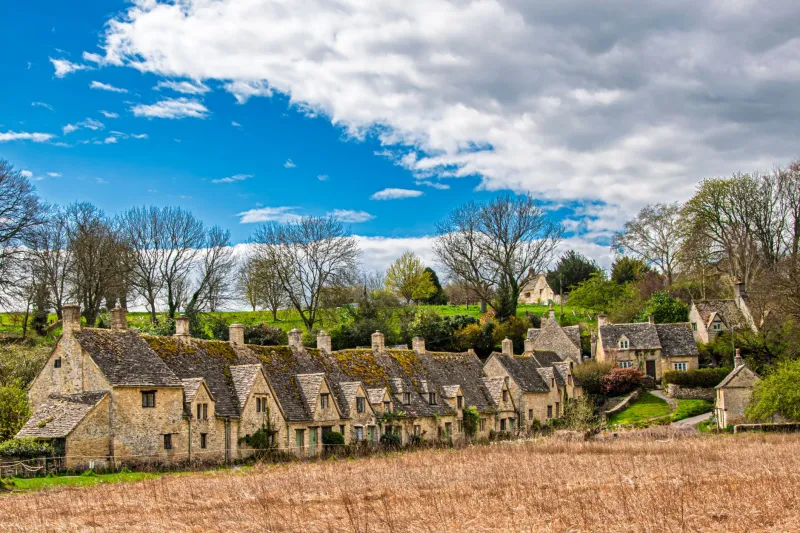
The Cotswolds: Where ‘Cots’ Meant Sheep
The name is older than the postcard prettiness. ‘Cot’ is an Old English word for a shelter or enclosure, and ‘wold’ means upland or open country — so the Cotswolds are, roughly, the sheep enclosures on the hills. Medieval wool money built the churches and market halls that visitors still admire. For a stash shade, think honey-coloured limestone and creamy oatmeal. A simple ribbed scarf in a warm aran weight would echo the dry-stone walls without demanding a complicated pattern.
Sheepwash, Devon: A Village Named for Laundry Day
Sheepwash does exactly what it says on the tin. The name comes from the Old English words for sheep and washing, a reminder that fleece preparation once happened at the river before shearing and spinning. Dartmoor’s hill sheep and the area’s smallholding history make it a lovely name to keep in mind when you are washing a fleece or wondering why your hands are cold. A river-stone grey yarn would suit a pair of felted mittens — useful, rustic and forgiving.
Ramsbottom, Greater Manchester: Valley of Rams
The name is usually read as ‘ram’s valley’, from Old English elements meaning ram and bottom or valley. The town’s later identity is firmly industrial, with textile mills and chimneys, but the older name keeps a pastoral note. That mix is the inspiration: a deep charcoal or soot-flecked grey, like mill stone softened by weather. A sturdy pair of socks in a hard-wearing blend would be a practical tribute to a place that knows about work and weather.
Lambeth, London: The Lamb Landing
Lambeth comes from Old English words for lamb and a landing place or hythe — a spot by the Thames where lambs may once have been landed or traded. It is a useful reminder that wool and livestock were part of London’s ordinary life long before craft fairs and coffee shops. For the stash, choose a soft Thames-mud brown or a chalky cream. A small colourwork pincushion or needle case would let you play with two shades without committing to a full garment.
Woolwich, London: The Wool Trading Place
Woolwich has one of the clearest woolly names in the country: Old English ‘wull’ plus ‘wic’, a trading settlement or farm. It points to a time when wool was a serious business, moved through ports and markets rather than tucked into pretty baskets. A navy blue or weathered grey yarn would suit a gansey-style cowl — simple texture, plenty of wear, and a quiet nod to maritime and market history.
Shetland: Hjaltland, the Hilt Land
The old Norse name Hjaltland is often explained as ‘hilt land’, a shape-and-place name rather than a woolly one. The wool story came later and louder: Shetland sheep, fine fleece, Fair Isle colourwork and gossamer lace. For a shade, pick sea mist, peat brown or heather purple. A small hap or shoulder shawl in a light fingering weight is the obvious project, but even a swatch can teach you why Shetland wool has such a long reputation.
Harris: Heartland of Tweed
Harris, in the Outer Hebrides, has a name often linked to Old Norse words for a district or heartland. Its textile fame rests on Harris Tweed, woven by islanders in their own homes and protected by law. The landscape gives you the palette: peat smoke, lichen, storm grey and bracken. A tweed-textured cushion in a sturdy aran would be a gentle way to bring that feeling indoors without pretending you are about to weave a length of cloth.
Kendal: Kendal Green
Kendal’s name is tied to the River Kent and the valley around it, but its place in textile history is tied to cloth. Kendal green was a famous woollen fabric, and the town’s markets moved wool and cloth for centuries. Choose a mossy green or a deep bracken shade and make a pair of colourwork mittens — small, portable and just the thing for a woolly weekend in the Lakes.
None of these places requires a booking, a packed lunch or a patient travelling companion. They are ideas to keep beside your patterns: a little local history, a colour to look for and a small project to anchor the name. The next best thing to going somewhere woolly is letting the stash take you there.