Knit Where You Are: A Quiet Case for Taking Your Stitches Out in Public
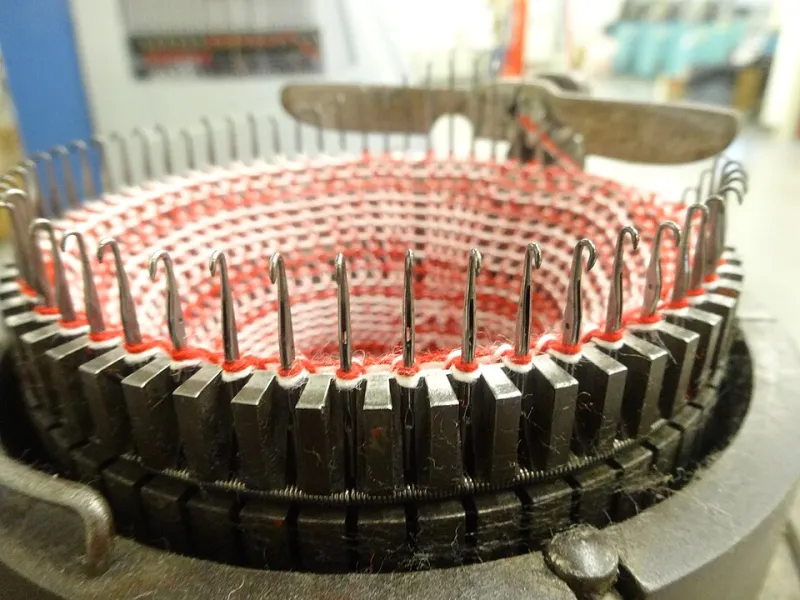
Photo: webqueen-1444369, CC0, via Wikimedia Commons
I learned to knit in a front room, in a particular armchair, with the telly on. For years I treated that chair as the only legitimate place to do it, as though knitting required a licence and the licence specified a sofa.
Then I missed a train and had forty minutes to fill at Leeds station, and I'd shoved a sock-in-progress into my bag on a whim. I sat on a bench, cast on, and something shifted. Two people asked what I was making. One of them was a woman who hadn't knitted since her mum taught her in the seventies and who went home and dug out her needles. That's not a dramatic story. It's just a small one that happens constantly, and it only happens when the needles come out of the house.
So here's the argument, plainly stated: stitching in public is good for you, good for the hobby, and mildly good for the world. It's also far less embarrassing than you think.
The case for making a spectacle of yourself
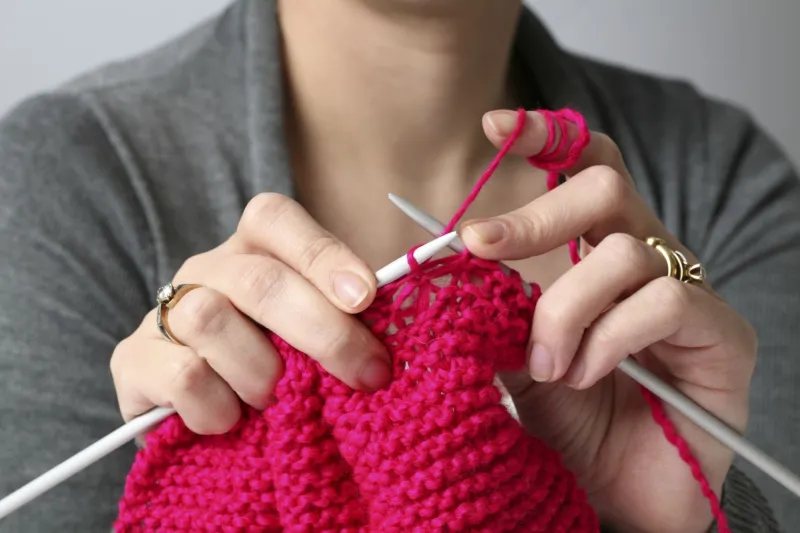
Most craft hobbies are invisible. Nobody sees a finished jumper and understands the forty hours behind it; they see a jumper. Knitting somewhere public makes the work visible in real time — the counting, the swearing under your breath, the whole unglamorous process.
It also starts conversations. Not always welcome ones, I'll grant you, but mostly lovely ones. People tell you about their gran. People tell you about the cardigan they ruined in 1998 and still mourn. People ask if it's hard, and you say yes, and then you say not really, and then you show them a knit stitch.
There's a community argument too. The more knitting is seen — on commutes, on benches, in pubs — the less it reads as a niche hobby for a specific kind of person, and the more it reads as something ordinary that ordinary people do. That matters if we want younger makers, more men knitting, more people picking up needles at fifty after a lifetime of thinking it wasn't for them.
And honestly? It makes dead time feel less dead. Twenty minutes in a waiting room is twenty minutes of ribbing. Two hours on a train is a heel turn. It's not about productivity guilt; it's that a fidgety, phone-scrolling half hour becomes a quietly satisfying one.
For the self-conscious: a few confidence boosters
Start small and start local. A simple sock or a plain garter-stitch scarf is discreet, portable and hard to catastrophise. Save the lace shawl with the chart for home.
Choose your first outing deliberately: a park bench, a café corner, a friend's kitchen. Somewhere you'd be comfortable sitting anyway. You're not performing; you're just not hiding.
Take the headphones if you want them. Nobody is owed a chat just because you have needles out. A pair of earbuds is a perfectly polite way of saying "available for stitching, not for conversation".
Remember that the fear of being watched is usually bigger than the reality. Most people glance, register something pleasant, and go back to their phone. If someone does look, it's almost always curiosity rather than judgement.
Etiquette, the short version
- Ask before you assume. In a pub, a café or a shared table, check it's fine. It nearly always is, and asking costs nothing.
- Keep it compact. Circulars over long straights, a small project, and a bag to catch the yarn. Nobody wants to sit down on a cable needle.
- Be honest about the sharp things. If you're embroidering or using a particularly poky needle in a crowded space, keep the points down and towards yourself.
- Don't colonise. Take one seat, not a table for four with your blocking mat and your entire stash.
- Read the room. Hospitals and quiet carriages aren't the moment for a running commentary on your stitch count, and a library isn't the place for a full row of purling at volume.
- Let people be kind. If someone compliments it, say thank you. That's the whole exchange. You don't have to be modest about it first.
The best places to stitch in public
Trains. Genuinely the finest knitting venue Britain has to offer. The hum, the window, the fact that you have nowhere else to be. Go for a window seat.
Parks in summer. Half an hour on a bench with a sock is a very civilised way to spend a lunch break, and dogs will come and inspect you.
Pubs. Especially a quiet Sunday afternoon one with a fireplace and a corner table. Knitting and a half of something dark is a proper combination.
Waiting rooms. The single most improved category of time in modern life. Take a small project and the appointment will feel half as long.
Cafés mid-afternoon. The dead hours between lunch and the school run, when the tables are free and nobody minds you sitting for a bit.
Craft groups in borrowed spaces. Village halls, church rooms, library meeting rooms — the everyday public buildings where the hobby already quietly lives.
And the places to think twice about
Peak-hour tubes. Not the knitting; the elbows. Nowhere to put your arms and someone's coat in your yarn.
Fancy restaurants. Nobody wants a skein next to the wine list. Read the mood.
Formal ceremonies. Weddings, funerals, graduations. Even a plain sock is making a statement, and not the one you mean.
Children's soft play. You will not complete a stitch, and you know it.
Anywhere the reason you're there is a person. If a friend needs you, put the needles down. They'll keep.
A small invitation
You don't have to become the person knitting at the bus stop. You could just take a project with you next time, and see whether you take it out. If you don't, no harm done; nobody's keeping score. If you do, someone might ask what you're making, and you'll tell them, and the hobby will have gained a little more daylight.
That's the whole manifesto, really. The front room is lovely. But the world is also full of perfectly good benches.